

During cement grinding, unsatisfied charges develop on the newly created particle surfaces, which then cause an electrostatic attraction of the cement particles. The higher the targeted fineness, the more surface charges are generated. Increasing electrostatic attraction forces agglomeration of ground particles leading to basic actions like coating effect as shown in the image below:
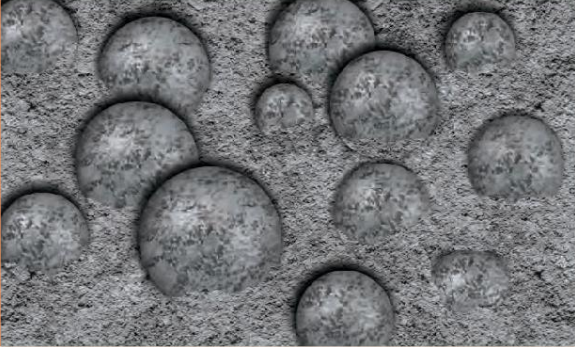
Ground particles stick on grinding equipment (coating effect) and soften the impact of the arinding media.
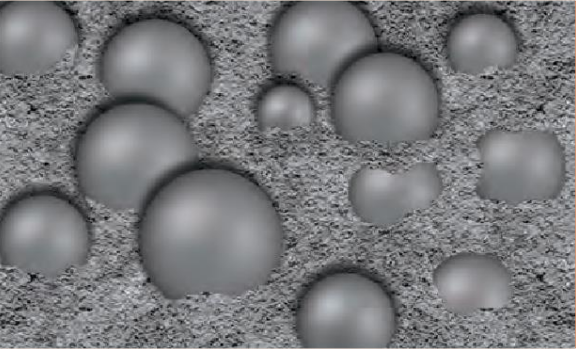
The use of ADOCEM Products reduces the coating effect and leads to blank mill internals. This resulting to intensified impact of the colliding grinding media and enhances the grinding efficiency.
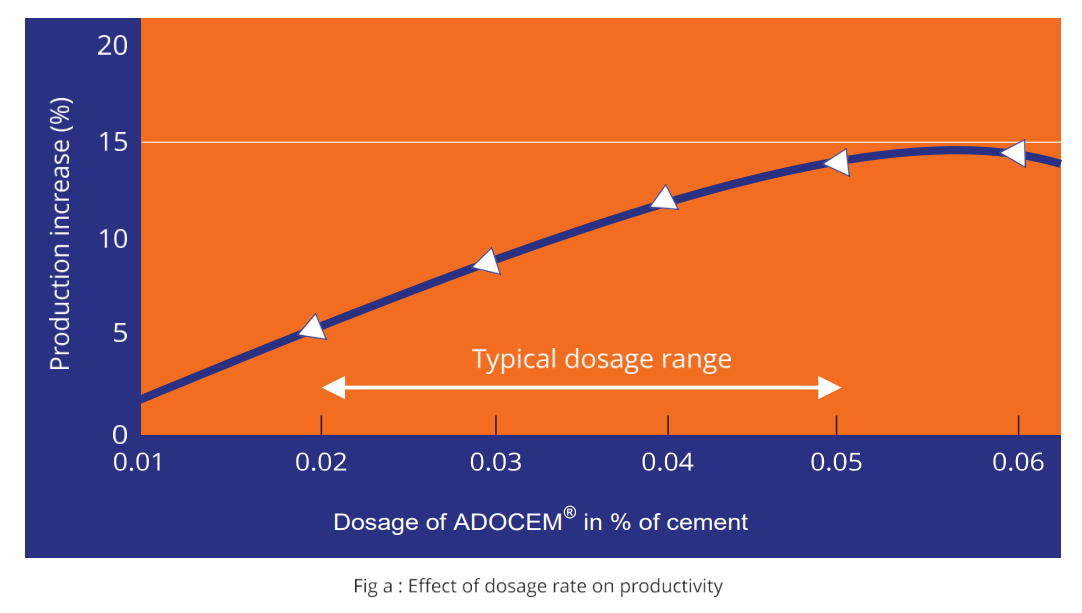
Grinding aids are usually added at low dosages, typically in a range of 0.02% – 0.05%, either onto the mill feed or directly into the mill itself. They are based on substances of high polarity. While being adsorbed on the existing and newly created cement particle surfaces, they neutralize the surface charges. As a consequence, the particle surfaces do not attract each other anymore. Three different effects can be observed:
1) Grinding aids enhance the grinding and separating efficiency which leads to an increased production rate.
2) The resulting lower content of over ground particles meets the characteristics of a more favorable particle size distribution with better cement quality.
3) ADOCEMR allows producers to economically achieve the desired fineness and quality of cement. The magnitude of the production increase is related among others to the grinding aid dosage. Up to the maximum reasonable dosage of a specific grinding aid, the production rate increases and the separator rejects decrease. Further increased dosage results in a shorter time for the cement to pass through the mill. If the mill retention time is reduced too much, the cement is insufficiently ground which leads to increased separator rejects and hence a reduced production rate (Fig a).